
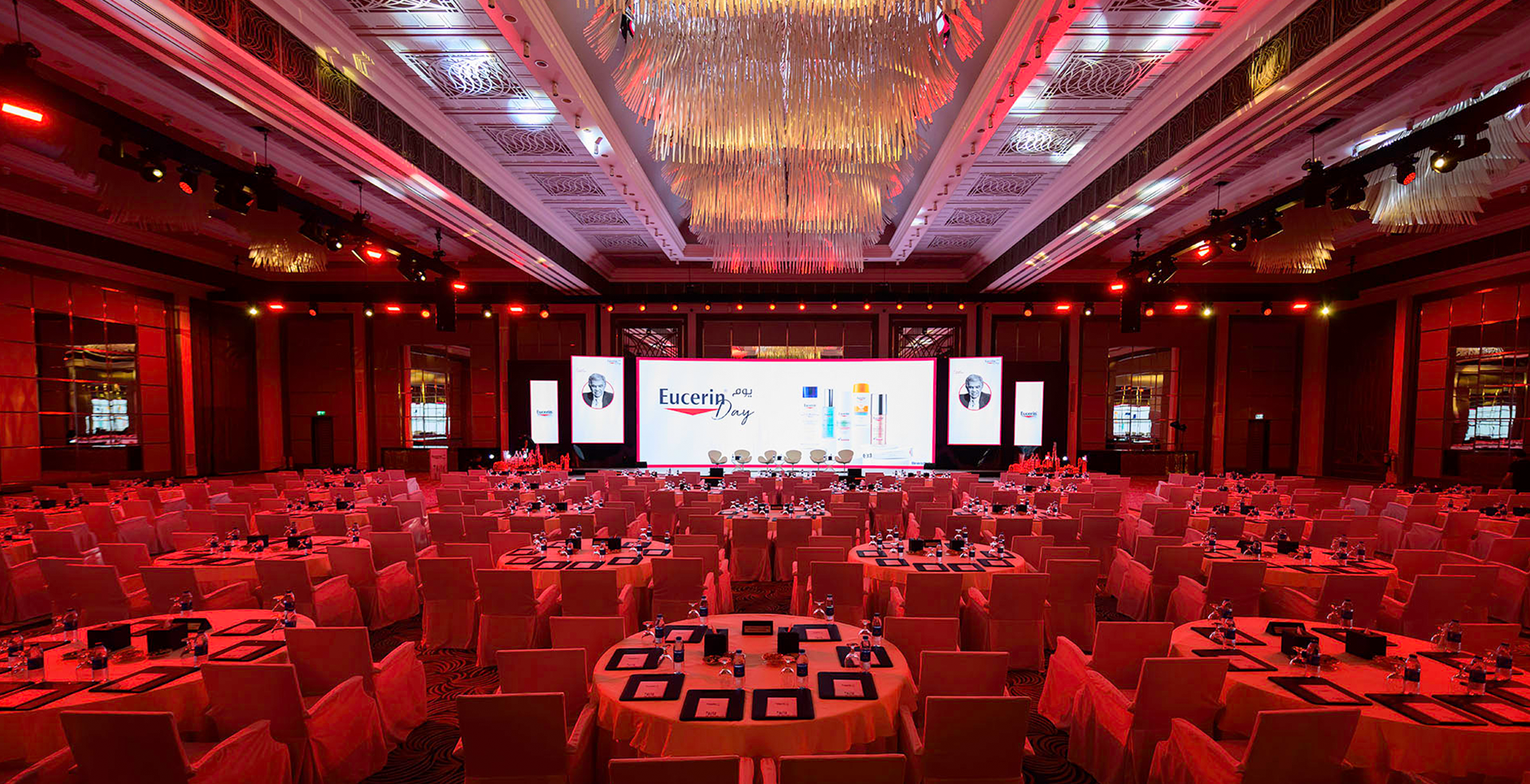
The Middle East has, over the past decade, established itself as one of the world’s most important hubs for Meetings, Incentives, Conferences, and Exhibitions (MICE). Cities such as Dubai, Abu Dhabi, and Doha have built strong reputations supported by advanced infrastructure, global connectivity, and consistent investment in large-scale events.
However, the current geopolitical tensions in the region have introduced a new layer of uncertainty into global travel patterns. While the situation continues to evolve, early indicators suggest that the MICE sector is experiencing measurable disruption – primarily driven by shifts in sentiment, air connectivity, and cost structures.
At the same time, the underlying fundamentals of the sector remain intact. Demand for travel and in-person engagement continues to hold, raising an important question for the global events industry: not whether MICE will recover, but how it will adapt – and where activity may temporarily shift.
Immediate Impact: Sentiment, Connectivity, and Event Confidence
The most immediate effect of the conflict has not been structural collapse, but disruption in perception and access.
Recent projections indicate that inbound travel to the Middle East could decline by approximately 25–30% under sustained disruption scenarios. This is largely driven by:
- flight cancellations and rerouting
- temporary airspace restrictions
- evolving travel advisories
- reduced forward booking confidence
For the MICE sector, these factors have a direct and immediate impact. Conferences and exhibitions rely heavily on international participation, and even short-term uncertainty can lead to:
- reduced delegate turnout
- delayed confirmations
- sponsor hesitancy
- increased operational risk
Importantly, these impacts are not always proportional to the actual level of disruption on the ground. Perception, particularly among long-haul travellers, plays a significant role in shaping event viability.
Uneven Impact: International vs Regional MICE Demand
The disruption is not uniform across all segments of the travel market.
Data indicates that a significant portion of travel within the Gulf region is domestic or intra-regional, while long-haul inbound travel represents a smaller but higher-value segment. It is this long-haul segment that is most exposed to current uncertainty.
For MICE, this translates into a clear pattern:
- Large international congresses face the greatest risk
- Regionally focused events remain relatively stable
- Domestic business events show the highest resilience
This shift is likely to accelerate a broader trend toward regionalisation of events, where organizers prioritise accessibility and lower-risk travel corridors over global reach in the short term.
Cost Pressures and Operational Adjustments
In addition to connectivity challenges, rising energy prices present a secondary layer of pressure on the sector.
Higher oil prices are expected to translate into increased airfares, placing upward pressure on the cost of travel globally. At the same time, broader inflationary effects are influencing both corporate and individual spending decisions.
In practical terms, this is already shaping MICE behaviour:
- smaller delegations
- shorter event durations
- increased scrutiny on return on investment
- demand for cost-efficient destinations
While these adjustments do not eliminate demand, they do influence where and how events are hosted.
Structural Resilience: Why the Middle East Will Recover
Despite current disruptions, the Middle East’s MICE ecosystem remains fundamentally strong.
Key destinations such as the UAE continue to demonstrate resilience due to:
- established aviation hubs
- strong government coordination
- existing global route networks
- mature hospitality infrastructure
As highlighted in industry discussions, recovery in the region is expected to be sequential, with business travel and events leading the rebound once stability returns .
This reinforces an important point: MICE is not only affected by disruption – it is also a driver of recovery, helping restore confidence and re-establish global connections.
Shifting Opportunity: The Rise of Alternative MICE Destinations
While the Middle East remains central to global MICE activity, the current environment is creating space for alternative destinations to play a more prominent role.
As travel patterns adjust, organizers are increasingly considering locations that offer:
- strong connectivity without reliance on affected air corridors
- political and operational stability
- cost efficiency
- growing event infrastructure
Within this context, Africa – particularly East Africa – is gaining relevance.
Kigali and Nairobi: Emerging MICE Hubs in a Shifting Landscape
Two cities that stand out in this evolving landscape are Kigali and Nairobi.
Kigali
Kigali has positioned itself as a focused, high-efficiency MICE destination. Its strengths include:
- compact and well-organised city infrastructure
- a growing portfolio of international conferences
- strong government support for business tourism
- a reputation for safety and ease of movement
Kigali’s model is particularly suited to mid-sized conferences, policy forums, and high-level meetings where efficiency and control are key priorities.
Nairobi
Nairobi offers a different but complementary proposition.
As a regional economic and diplomatic hub, Nairobi provides:
- access to international organisations and NGOs
- strong air connectivity across Africa, Europe, and the Middle East
- a diverse hospitality and venue ecosystem
- experience hosting large-scale regional and international events
Nairobi is particularly well suited for:
- multi-sector conferences
- development and policy forums
- large-scale exhibitions and trade events
A Complementary Role, Not a Replacement
It is important to note that emerging destinations are not replacing the Middle East, but rather complementing it within a more distributed global MICE landscape.
In the short to medium term:
- The Middle East will remain a primary hub for global events
- Alternative destinations will absorb overflow and risk-sensitive events
- Regionalisation will shape event design and location decisions
This creates an opportunity for cities like Kigali and Nairobi to position themselves as reliable, accessible, and strategically located alternatives.
The current geopolitical situation in the Middle East is reshaping, but not diminishing, the global MICE sector.
Disruption is being felt most strongly through sentiment, connectivity, and cost pressures. However, demand for travel and in-person engagement remains resilient, and the role of events in driving recovery is widely recognised.
For the industry, this moment represents a shift rather than a setback.
As organizers adapt to changing conditions, destinations that offer stability, accessibility, and operational readiness will play an increasingly important role. In this context, Kigali and Nairobi are well positioned to contribute meaningfully to the next phase of global MICE activity.